
VAP®
The AIRBUS Defence and Space GmbH (formerly EADS) patented Vacuum Assisted Process (VAP®) uses the properties of modern, semi-permeable membrane systems in highly developed textile composites to apply the effect of a vacuum to the entire surface of a component. This “vacuum assist” ensures that trapped air and gas can be reliably and efficiently removed during resin infusion.
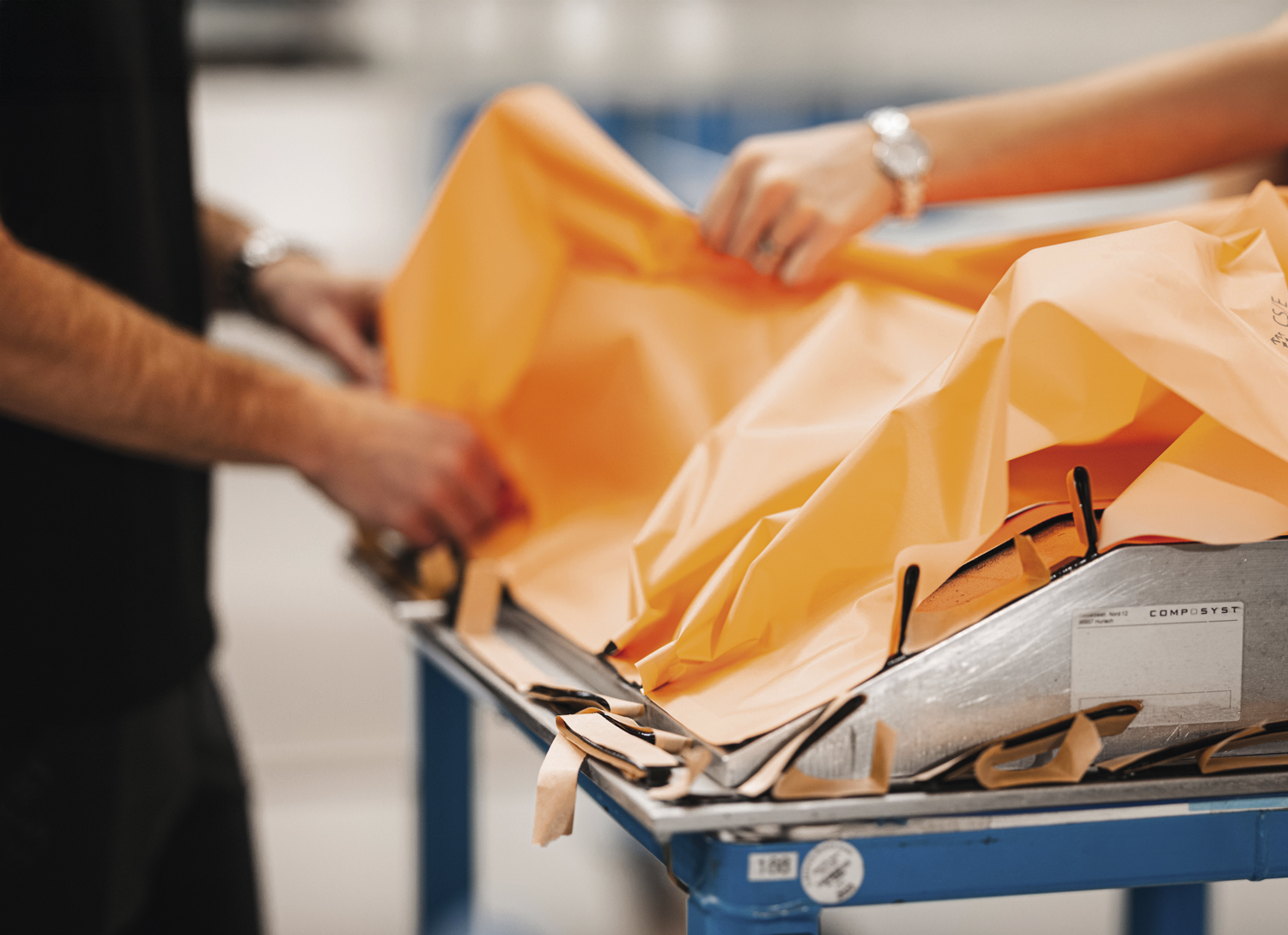
The Vacuum Assisted Process (VAP®) is a technique to manufacture composite parts using vacuum injection; it applies membrane-assisted low-pressure infiltration. The surface of the part to be infiltrated with resin is covered with a flexible membrane system. The membrane is permeable to gas but impermeable to resin. When resin is infiltrated into the part inside the membrane, the latter keeps the resin inside the matrix and away from the vacuum duct. Yet, aided by the low pressure in the vacuum duct, trapped air and gas can still escape through the membrane’s micro-permeability and are purged via the textile layer. The vacuum acts uniformly, so purging takes place across the entire contact surface between part and membrane, during and after infiltration.
Resin fed into the membrane is retained by it and remains in the so-called injection chamber.
The Vacuum Assisted Process (VAP®) is a technique to manufacture composite parts using vacuum injection; it applies membrane-assisted low-pressure infiltration. The surface of the part to be infiltrated with resin is covered with a flexible membrane system. The membrane is permeable to gas but impermeable to resin. When resin is infiltrated into the part inside the membrane, the latter keeps the resin inside the matrix and away from the vacuum duct. Yet, aided by the low pressure in the vacuum duct, trapped air and gas can still escape through the membrane’s micro-permeability and are purged via the textile layer. The vacuum acts uniformly, so purging takes place across the entire contact surface between part and membrane, during and after infiltration.
Resin fed into the membrane is retained by it and remains in the so-called injection chamber.

VAP® Vorteile
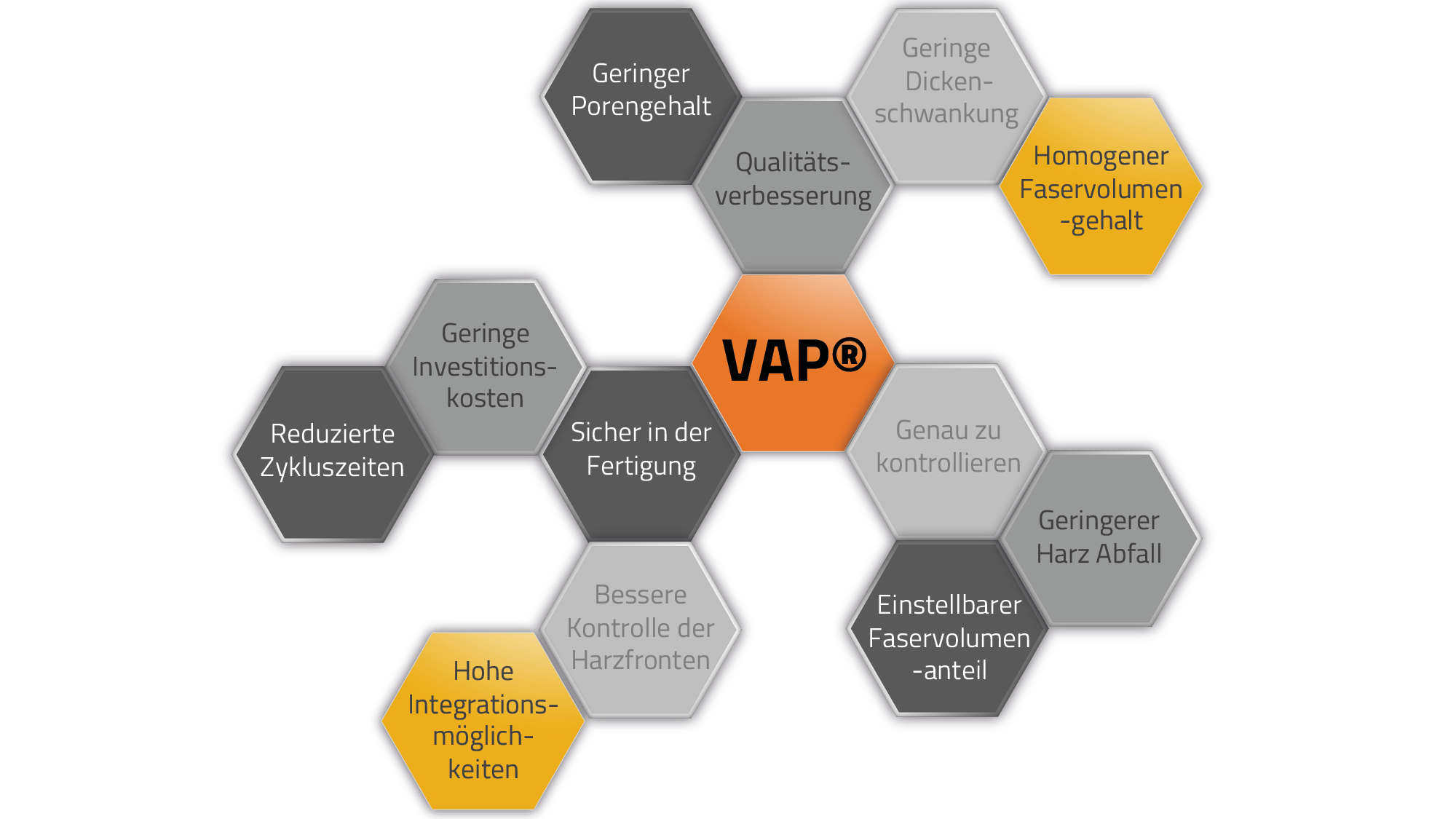
VAP–Vorteile
Einfache Implementierung
Hervorragende Qualität
Geringere Nacharbeiten
Niedrige Porosität
Vermeidung von Harzresten
Erzielen von homogenen Fasergehalten
Keine Schwankungen der Bauteildicke
Fließfrontensteuerung
Kürzere Zykluszeiten
Höhere Bauteilintegration
Stabiler und geregelter Prozess
Bessere Wirtschaftlichkeit
Minimale Investitionen